
The story
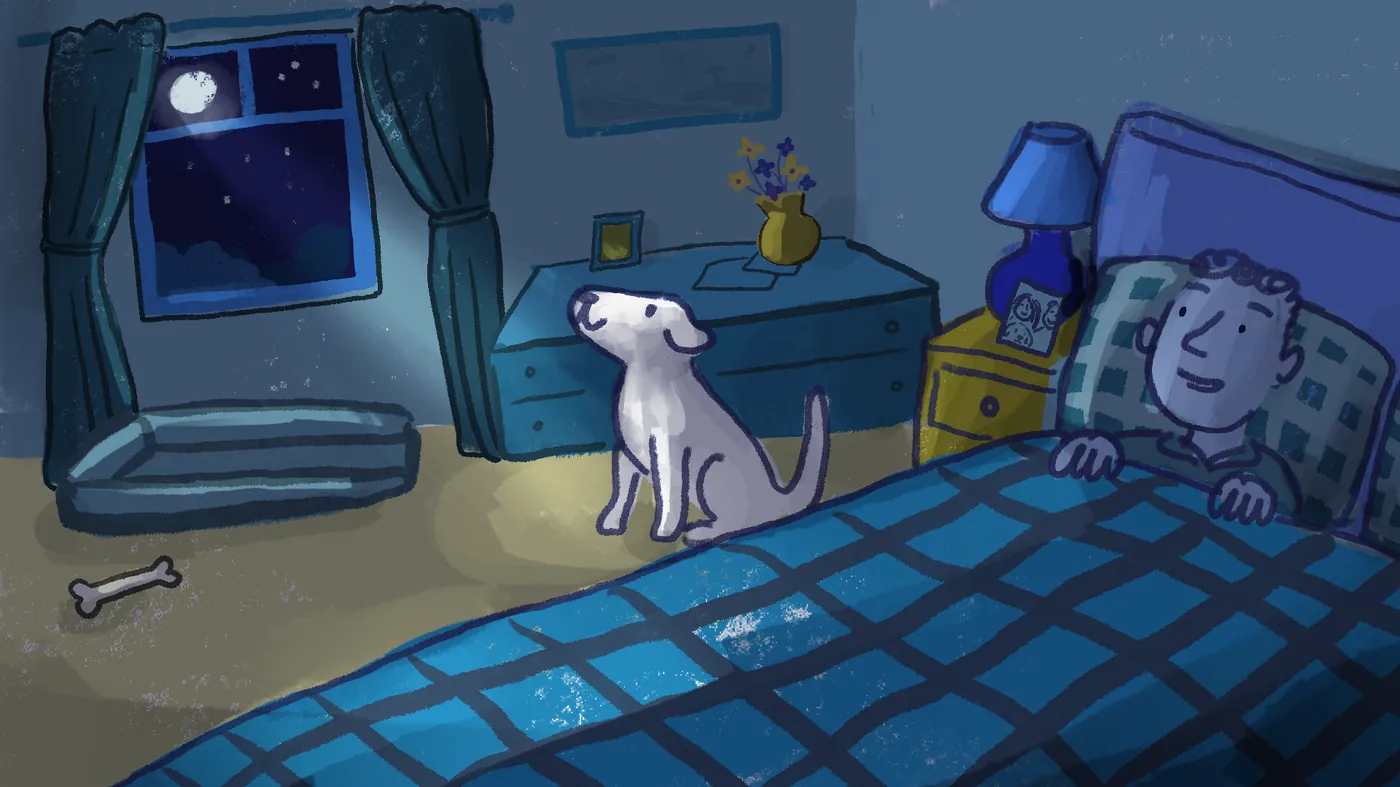
It begins in a bedroom, late. The house is asleep. Luna is not, because there is a white circle hanging in the window, and she has met that shape before. Round things belong on the floor. Round things belong to her.
So she tries. She tries from the bed and she tries from the window. She goes out into a street the color of old gold, and the moon comes along, keeping exactly the same distance however fast she walks — which is, if you are a dog, an outrageous thing for a ball to do.
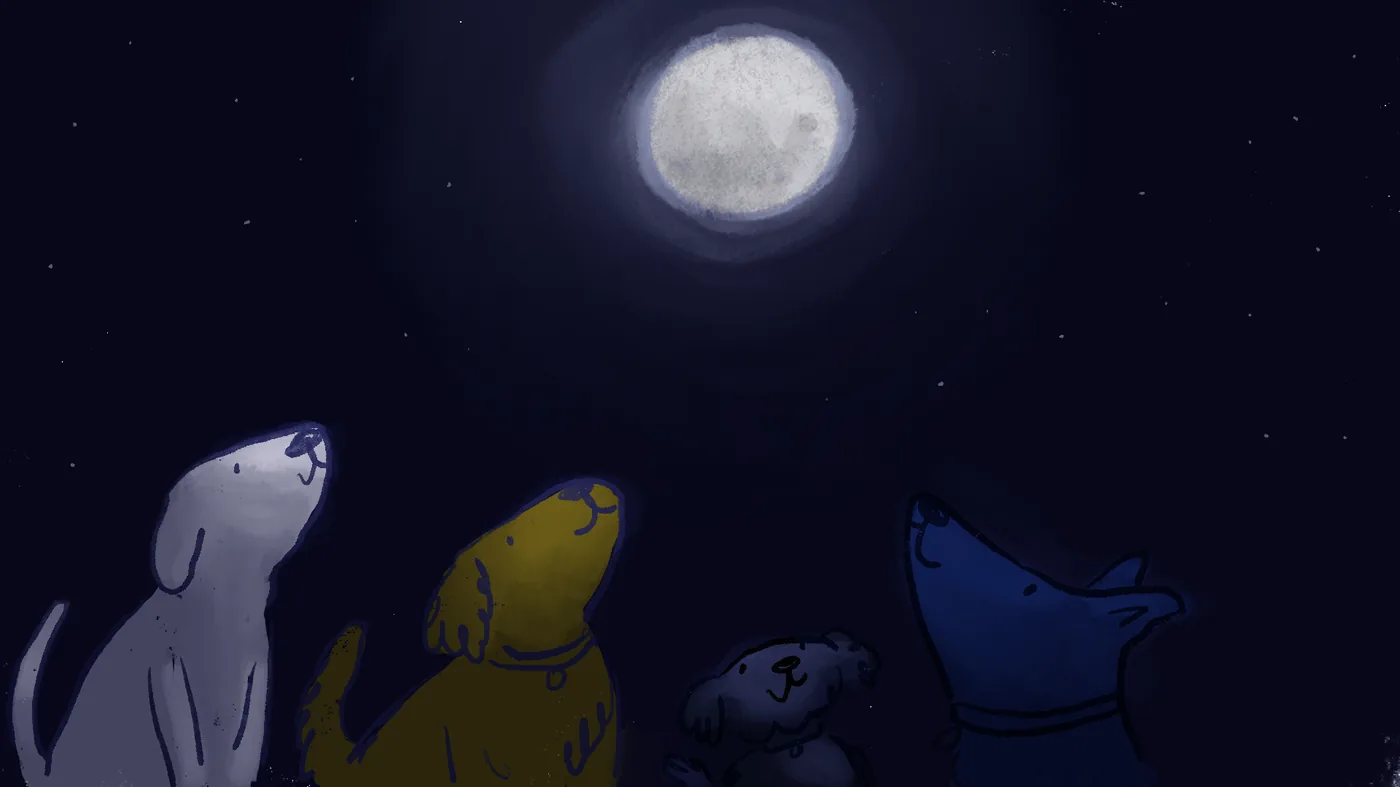
Outside she finds she is not the only one. Other dogs are already there, heads tipped back, saying something to it. Nobody catches the moon. That was never really the plan. Then she goes home, climbs back onto the bed, and sleeps with her chin on somebody’s ankle, which was the plan all along.
Drawn by hand
Every frame is drawn by hand. You can see it in the lines: the brush wobbles, the edges are not exact, the paint sits unevenly on the wall of the bedroom. We like that. A perfectly clean frame is easy to make now, and it reads as nothing in particular. A hand-drawn one reads as somebody having been there.
For dogs, and for children
We made it for both, which is less of a stretch than it sounds. What a dog needs from a screen and what a child needs at bedtime turn out to be the same list: slow pans, long holds, no sudden noise, nothing that lunges. A story where the stakes are a ball, and where everybody ends up in the right bed.
In the colors they can see
A dog has two kinds of cone where we have three, so blues and yellows arrive clearly and reds and greens do not. Night suits that palette: deep blue rooms, a yellow lamp, a white moon on a near-black sky. And dogs see better than we do in low light, so of everything in the story, the moon is the part they see most clearly.
Where to watch
It is free, like everything we make. Find it on the Siesta channel, preferably with the lights low.
If your dog would rather stay up, we also run a 24-hour news channel for dogs.