
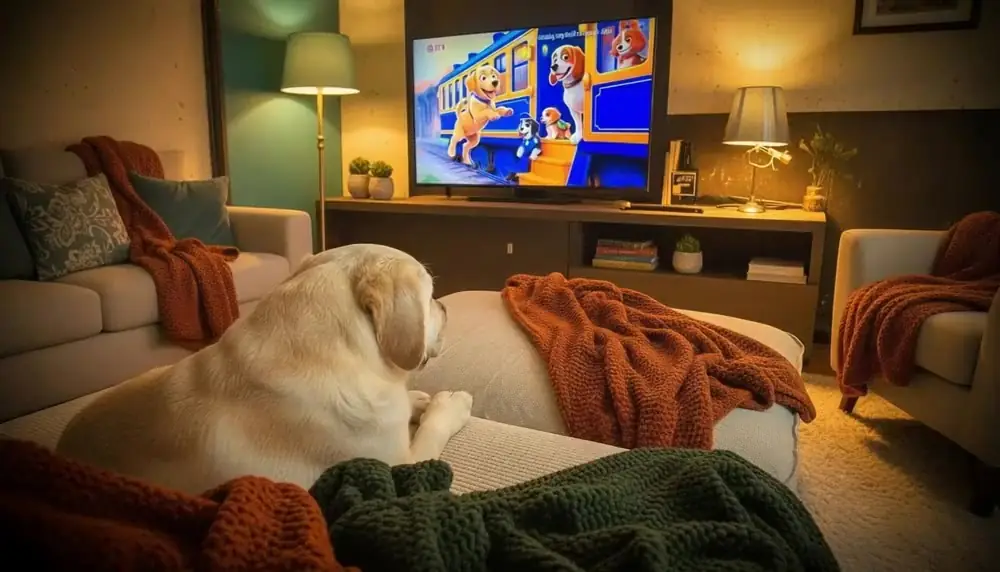
There is no single number that works for every dog. And being physically able to wait six hours does not mean a dog should regularly spend six hours alone.
Why the number changes
The question sounds simple: how many hours can a dog stay home without someone there?
But dogs are individuals, not timers.
A healthy adult dog that has gradually learned to relax alone may spend several hours sleeping comfortably.
Another dog may become distressed within minutes of the front door closing.
Age matters. Health matters. Previous experiences matter.
So does what happened before you left.
A dog that has enjoyed a proper morning walk, had an opportunity to sniff, used the toilet and received some attention is in a different position from a dog that woke up, ate breakfast and watched you rush out.
Physical exercise is important, but mental stimulation matters too.
A slow walk full of interesting smells can be more satisfying than a hurried trip around the block.
There is also a difference between an occasional long absence and a daily routine.
Leaving a comfortable adult dog for five hours once because something unexpected happened is not the same as expecting that dog to manage nine hours alone every working day.
The RSPCA, Dogs Trust and PDSA recommend avoiding routine absences longer than four hours.
That is a sensible benchmark, even if an individual dog can occasionally cope with longer.
And remember that tolerating an absence is not the same as enjoying it.
Dogs need movement, exploration, play, outdoor time and social contact.
A quiet afternoon should be one part of their day, not their entire life.
Puppies: why the honest answer is uncomfortable
Puppies make the question much harder.
Their bladders are small. Their routines are unpredictable. They need frequent meals, toilet breaks, supervision and opportunities to learn about their surroundings.
The common rule of one hour per month of age gives a rough idea of maximum daytime bladder control.
For example, a three-month-old puppy might manage around three hours between toilet breaks under favourable conditions.
But that is not a recommendation to leave a three-month-old puppy alone for three hours.
Bladder control and emotional readiness are different things.
A puppy may physically manage a toilet break schedule but still be frightened by isolation.
Very young puppies are adjusting to a major change. They have recently left their mother, littermates and familiar environment.
Expecting immediate independence is unrealistic.
Alone-time training should begin with very short, comfortable separations.
You might step behind a baby gate for a few seconds, return calmly and gradually increase the duration.
The puppy should remain relaxed throughout.
If they become distressed, the next attempt should be easier.
Avoid making every departure a test of how long they can cope.
Someone working full-time away from home can still raise a puppy responsibly. But it normally requires a plan involving another person, flexible hours, a sitter or suitable daytime care.
A television cannot raise a puppy while you are at work.
Neither can an automatic feeder.
Puppies need people.
Boredom or anxiety: how to tell them apart
A dog that chews furniture when left alone is not necessarily suffering from separation anxiety.
They might be bored, under-stimulated, frustrated or reacting to something outside.
But they might also be experiencing genuine distress.
Understanding the difference changes what you should do next.
Boredom usually relates to a lack of activity or stimulation.
A bored dog may look for something to investigate, chew or play with.
They might spend much of the afternoon sleeping and become restless later.
Providing appropriate enrichment, exercise and company can help.
Separation anxiety is different.
A dog with separation-related distress may become frightened as soon as they realize they are being left.
Signs can include persistent barking or howling, pacing, trembling, drooling, destructive escape attempts or toileting indoors despite being housetrained.
Some dogs become distressed before their owner has even left.
Others show more subtle signs.
A dog that lies silently by the door for hours is not automatically relaxed.
One useful approach is to record your dog during an ordinary absence.
Watch what happens immediately after you leave and throughout the time you are away.
Do they settle and sleep?
Do they occasionally get up, stretch and change position?
Or do they pace continuously, vocalise, scratch at exits or appear unable to relax?
The Dogs Trust guidance on separation anxiety explains why observing behavior during absences is important.
If you suspect separation anxiety, speak to your vet and seek help from a qualified clinical animal behaviorist.
True separation anxiety does not disappear because you leave a cartoon, radio or playlist running.
It requires an individual behavior plan, often involving carefully managed separations and gradual training.
What genuinely helps
A good routine starts before you leave the house.
Give your dog a meaningful morning walk.
Allow time for sniffing, exploring and using the toilet.
Do not think only in terms of distance. A dog needs opportunities to engage with the environment.
Match the exercise to their age, health and fitness.
Afterwards, allow time to settle before leaving.
Arrange a midday visit.
If you work outside the home for a full day, someone coming in halfway through can make an enormous difference.
A trusted friend, family member or professional dog walker can offer a toilet break, movement, attention and a change of environment.
For many households, this is the most useful adjustment.
Provide safe enrichment.
A suitable food puzzle, familiar chew or scattered food search may give your dog something enjoyable to do after you leave.
Choose items you already know are safe for your dog without supervision.
Rotate activities rather than expecting the same toy to remain interesting forever.
Build independence gradually.
Practise short absences when you have no urgent reason to leave.
Return before your dog becomes distressed, then increase the time slowly.
Keep departures and arrivals predictable.
Use background sound only as additional support.
Some dogs settle more easily with familiar, consistent audio than in a completely silent house.
Others prefer silence.
Siesta's steady, low-stimulation sound and picture can make an empty house feel less empty during the afternoon hours.
But a screen does not make an eight-hour absence acceptable.
Neither does music, an automatic food dispenser or a camera that lets you watch your dog from work.
Dogs need to sniff, run, play, go outside and spend time with their people.
The purpose of enrichment is to improve the hours when those needs have already been met.
It is never a substitute for meeting them.
Questions
How many hours can an adult dog be left alone?
Four hours is a safer routine limit. Four to six is an upper range some healthy adult dogs tolerate occasionally.
How long can a puppy be left alone?
Far less. A rough bladder guide is one hour per month of age, but emotional readiness is a separate question.
Does leaving a screen on make a long absence acceptable?
No. A screen can improve the hours when a dog’s needs have already been met. It never replaces them.
For more practical ideas, read the free guide. Take the test